

A processor fee lands in bank charges in January and software expense in February, even though the underlying activity hasn’t changed. By the time you spot the difference, you’re reviewing two workpapers, tracing two source files, and deciding which treatment belongs in the GL.
Consistent account coding matters because every later step depends on it. Reconciliations group activity by account. Support schedules carry balances forward. Flux analysis assumes one period can be compared with the next. A coding decision that changes without explanation weakens all three.
The work isn’t just picking an account from a list. Your team has to identify what the source represents, apply the right entity and dimensional context, check the prior treatment, and surface anything that doesn’t fit. Extraction gets the transaction onto the page. Accounting preparation determines where it belongs and whether a reviewer should accept it.
Key Takeaways:
- Define coding rules around recurring workflows, not vendors alone.
- Use prior workpapers as evidence of established treatment, not as automatic authority.
- Separate repeatable coding from items that require accounting judgment.
- Review source, account, dimensions, and exceptions in one workpaper.
- Capture reviewer corrections so the next period starts with the confirmed treatment.
- Keep Sage Intacct or QuickBooks Online as the system of record.
Why Account Coding Breaks Before the Reviewer Sees It
Account coding becomes inconsistent when context gets separated from the transaction. The bank feed may show a deposit, but it won’t explain the processor fee, donor restriction, entity split, or prior classification behind that amount. Once those details live in different files, coding starts to depend on who prepares the work and what they remember.
The source file carries more than an amount
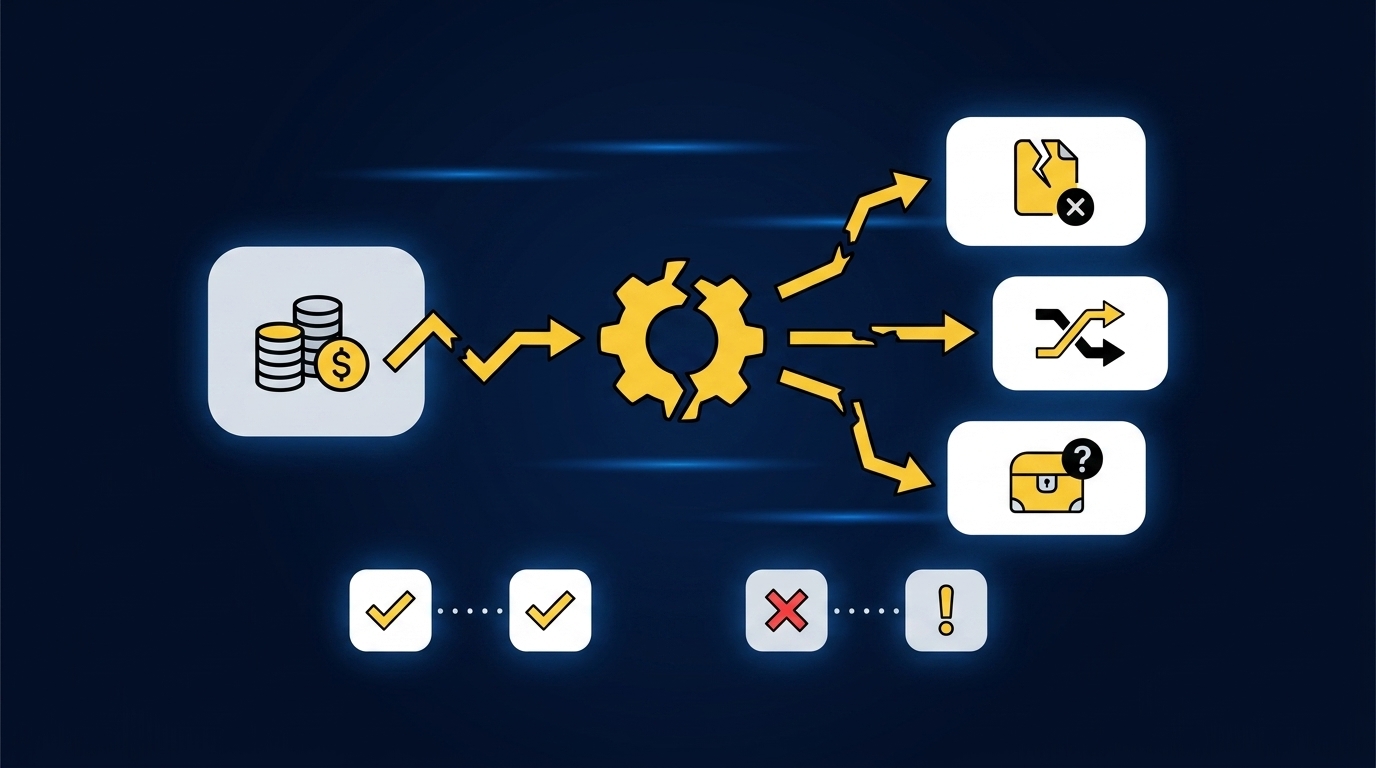
A nonprofit accountant opens three files for a single deposit at 4 p.m. on a close day: donor activity, a processor settlement report, and bank detail. Each source describes the activity differently. One carries campaign and restriction data, another shows fees and refunds, and the bank shows the net cash received. Code the bank line by itself and you lose the context the reconciliation and the journal entry both need, which is exactly how the same $4,200 deposit ends up split two different ways across two months.
Family-office work has the same problem in a different form. A custodian statement may contain trades, dividends, interest, and fees across an entity or investment vehicle, while the ERP balance reflects the accounting treatment applied in prior periods. The preparer has to connect those sources before assigning accounts. Source-file work is accounting work because the document’s meaning determines the coding.
Manual preparation has a real advantage here: a skilled accountant can adapt when the statement changes or an unusual transaction appears. That flexibility is why spreadsheets have lasted. The cost is that the decision often stays in the preparer’s head, a reviewer note, or a formula no one can interpret next month. Familiar work can still produce inconsistent account coding.
Clean totals can hide coding drift
A reconciliation can balance while its coding changes underneath it. If a processor fee moves between expense accounts, or a donation loses its fund dimension, cash may still tie to the bank. The inconsistency appears later in departmental reporting, restricted-fund activity, or the questions a reviewer asks during close.
One customer conversation shows why the preparation layer matters. A lead-generation company reported reducing monthly bookkeeping from roughly 10 hours to under 30 minutes after recurring categorization became more consistent, and the process surfaced a duplicated recurring charge worth $30,000. That’s one observed customer example, not a standard outcome, but the mechanism is useful: when the same fact pattern gets the same treatment every period, the one line that breaks the pattern stops hiding inside a total that already balances.
Coding drift is frustrating because the reviewer can’t tell whether a change reflects policy, a new fact pattern, or a preparer choosing a different account. The total looks finished. The support doesn’t. If you want to inspect how source links, coding rules, and exceptions can sit in one review surface, you can see the review workflow in context.
The first fix isn’t another review pass. It’s preserving the context that lets the same decision be made again.
How to Keep Account Coding Consistent Each Period
Consistent account coding starts with a bounded workflow: identify the recurring source set, document the established treatment, define which dimensions must survive, and send exceptions to the reviewer. The goal isn’t to prevent every change. It’s to make repeated treatment repeatable and changed treatment visible.
Where does coding inconsistency enter your close?
Pick one recurring workflow and compare it across two completed periods. A processor settlement, donation reconciliation, brokerage rollforward, prepaid schedule, or another account with known source files will do. Follow each transaction from source to workpaper and then to the GL. You’re looking for the point where accounting context disappears.
A difference isn’t automatically an error. One period may contain a new transaction type, a policy change, or an entity-specific exception that deserves different treatment. Coding consistency means the same facts receive the same treatment, while different facts are documented and reviewed. That distinction keeps consistency from turning into blind repetition.
Use these questions during the comparison:
- Does the same transaction type reach the same account in both periods?
- Are program, fund, department, location, or entity dimensions preserved?
- Can the reviewer see which source supports each coded line?
- Are changed classifications explained in the workpaper?
- Do corrections remain available when the workflow runs again?
If you can answer the first two questions but not the last three, the issue isn’t the chart of accounts. The issue is how coding decisions travel from one close to the next.
Define the rule at the workflow level
A vendor name is rarely enough to support an accounting rule. The same processor can remit deposits, deduct fees, reverse transactions, and hold reserves. The same custodian can report several forms of investment activity. Coding every line from one source to a single account produces consistency of appearance, not consistency of treatment.
Define the rule around what the transaction represents and which source fields establish that meaning. A processor fee may follow one treatment, while the deposit’s underlying activity follows campaign, fund, or program context from the donor export. For a family office, the rule may depend on entity, vehicle, activity type, and the treatment confirmed in the prior workpaper. Specific inputs make the rule reviewable.
A usable coding rule should state:
- Source: Which statement, export, or schedule establishes the transaction.
- Transaction type: What the activity represents in accounting terms.
- Account treatment: Which GL account receives the amount.
- Dimensions: Which fund, program, department, location, or entity applies.
- Escalation condition: What change sends the item to the reviewer.
Think of the rule like a formula in a workpaper. The answer matters, but the inputs and logic are what let someone re-perform it. If those disappear, the rule becomes a guess with a familiar result.
Treat prior workpapers as operating context
Prior-period coding gives the preparer a starting point that a generic chart-of-accounts template can’t. A confirmed workpaper shows which source was used, how the amount was calculated, which dimensions were applied, and where the reviewer changed the initial treatment. Together, those details explain how the team actually handles the workflow.
The prior period isn’t automatically right, and that limitation matters more than it first appears. New contracts, new restrictions, changed entity structures, or revised accounting policy can require a different answer, and copying the old entry would preserve the wrong treatment. The better practice is to compare current facts with the confirmed example and surface any difference that changes the conclusion.
Before reusing historical coding, check the sequence:
- Confirm that the source type and transaction type match.
- Compare the current-period facts with the prior support.
- Apply the established account and dimensional treatment.
- Flag any changed fact that could alter the accounting.
- Record the reviewer’s final decision with the workflow.
Historical examples become useful when they make current treatment easier to inspect. They shouldn’t become a substitute for judgment.
Put exceptions in front of the accountant
A missing statement shouldn’t receive a guessed classification. Neither should mixed personal and business activity, an unexpected balance change, or a transaction that no longer matches the established mapping. Those items are not proof that the workflow failed. They are the points where preparation should stop and judgment should begin.
The exception should arrive with enough context to make a decision. A reviewer needs the source file, the proposed coding, the prior treatment, and the reason the current item fell outside the rule. Without those pieces, an exception queue is just another inbox. With them, the accountant can confirm the treatment, correct it, or ask for more support.
Route these conditions to review:
- A required source file is missing or incomplete.
- Current activity doesn’t match the prior transaction pattern.
- Account or dimensional treatment conflicts across sources.
- A balance change can’t be explained by the prepared schedule.
- A new transaction requires a policy or materiality decision.
If your current process can’t carry that context into review, a focused workflow discussion can show where it drops. You can book a workflow review around one recurring account and its actual source set.
Review the workpaper before the journal entry
Five elements make prepared coding reviewable: source, calculation, accounting treatment, exceptions, and reviewer sign-off. A journal-entry draft alone shows the proposed destination. It doesn’t show why the amount belongs there, how dimensions were selected, or which judgment items remain open.
Review should follow the accounting path rather than the order of rows in an export. Start with completeness of source, then inspect the calculation and mapping, and only then approve the journal entry. That sequence catches missing context before the reviewer spends time testing a polished output built on incomplete support.
A practical review order is:
- Confirm completeness: Verify that the expected statements and exports are present.
- Trace material lines: Follow each selected amount back to its source.
- Inspect treatment: Check the account, dimensions, cutoff, and allocation.
- Resolve exceptions: Confirm or correct items outside the established process.
- Sign off: Approve the workpaper and its downstream journal-entry draft.
A workpaper is the handoff between preparation and judgment. When consistent account coding is visible there, the reviewer can focus on changed facts instead of rebuilding routine logic.
Carry corrections into the next close
A reviewer correction has value beyond the current journal entry. It explains how the team wants a recurring fact pattern treated, which source supports that conclusion, and where the original preparation went wrong. If the correction remains only in an email or edited spreadsheet cell, the next preparer has to rediscover it.
Capture the correction against the workflow. Record the confirmed account, required dimensions, reason for the change, and whether the decision applies to later periods. Some corrections are one-time exceptions. Others refine the recurring rule. Making that distinction explicit prevents a special case from becoming an accidental policy.
Coding consistency compounds through review. The first period may surface several mismatches because the workflow is being compared with the team’s known answer. Later periods should reuse confirmed treatment and continue routing changed facts to the accountant. Controlled iteration works because every approved correction makes the process more specific without giving up reviewer ownership.
How the Platform Preserves Coding Logic and Review
A preparation platform should connect current source files with prior treatment, prepare the expected workpaper, and keep exceptions visible to the accountant. It should never change accounting policy or post on its own. The mechanism has to preserve the team’s rules while keeping Sage Intacct or QuickBooks Online as the system of record.
Historical treatment stays attached to the workflow
Truewind uses historical-example learning to capture confirmed coding decisions, classification splits, allocation choices, and reviewer corrections. When the recurring workflow runs again, that history informs proposed treatment for the current source files. Changed facts remain visible, and the accountant still confirms the final answer.
Multi-source reconciliation carries the same logic across documents that describe one activity differently. Donor exports, processor reports, bank activity, custodian statements, and ERP balances can feed a reconciliation and supporting schedule tied to source. Unreconciled items aren’t forced to agree. They remain exceptions for reviewer judgment.
Review happens before the ledger changes
Truewind presents prepared workpapers, schedules, reconciliations, and journal-entry drafts in a human-in-the-loop review workflow. Source links, exceptions, and reviewer actions stay with the output, so an accountant can inspect what was prepared and correct it before anything moves downstream. Confirmed corrections can inform the next period without changing policy on their own.
After reviewer sign-off, approved output can move to Sage Intacct or QuickBooks Online with coding and dimensional context preserved. The GL remains the system of record. If your team wants to test that sequence against a recurring account with known prior workpapers, you can get a Truewind demo using the preparation and review steps your close already follows.
Consistent Coding Moves Judgment Downstream
Consistent account coding matters because it gives every later reviewer a stable path from source file to workpaper and from workpaper to GL. The goal isn’t rigid repetition. It’s repeated treatment where the facts match, visible exceptions where they don’t, and an accountant making the final call.
Start with one recurring, example-rich workflow. Compare the prepared output with a known answer, capture corrections, and expand only after the team can trace and re-perform the work. Capacity comes from removing repeated assembly, not removing the accountant.
Frequently Asked Questions
How do I handle edge cases effectively?
To manage edge cases effectively, start by documenting the specific conditions that trigger them. For example, if a transaction type doesn't fit standard coding rules, create a clear guideline for how to handle it. You can also leverage Truewind's Proactive Anomaly Detection feature, which identifies discrepancies and routes them to the accountant with necessary context. This way, exceptions are visible and can be addressed with informed judgment rather than guesswork.
What if my source files are inconsistent?
If your source files are inconsistent, first standardize the data by using Truewind's Automated Data Ingestion feature. This will help convert messy source documents into a structured workflow, making it easier to manage discrepancies. Next, compare the current data against historical examples using Truewind's Historical-Example Learning, which captures prior coding decisions and helps ensure consistency across periods.
Can I improve my review process?
Yes, you can enhance your review process by utilizing Truewind's Human-in-the-Loop Review Workflow. This feature allows accountants to inspect prepared workpapers, reconciliations, and journal-entry drafts before they are finalized. By ensuring that all source links and exceptions are visible, reviewers can trace back to the original documents and make informed decisions, ultimately leading to a more reliable accounting process.
When should I document coding rules?
You should document coding rules whenever you establish a new recurring workflow or when there are changes in transaction types. This helps maintain consistency and clarity. Truewind's AI-Powered Transaction Coding can assist by proposing categorizations based on your existing rules, ensuring that your team remains aligned with established accounting practices. Regularly reviewing and updating these rules will also help adapt to any changes in your financial processes.
Why does my reconciliation sometimes show discrepancies?
Discrepancies in reconciliation can occur due to inconsistent coding or missing context from source files. To address this, utilize Truewind's Multi-Source Reconciliation feature, which aligns activity across different sources and surfaces discrepancies for review. This ensures that all relevant information is considered, allowing for a more accurate reconciliation process.
Turn this into a close-ready workpaper
Start with sample files or upload your own statements to see how Truewind prepares review-ready workpapers and journal entries.